
Installing a cable tray system comes down to four decisions: where the supports go, how the bends are made, how the tray is fixed, and how it is earthed. Get those four right and the rest is straight runs. This guide explains what decides each one, so the installation goes in once and stays in.
Straight runs first
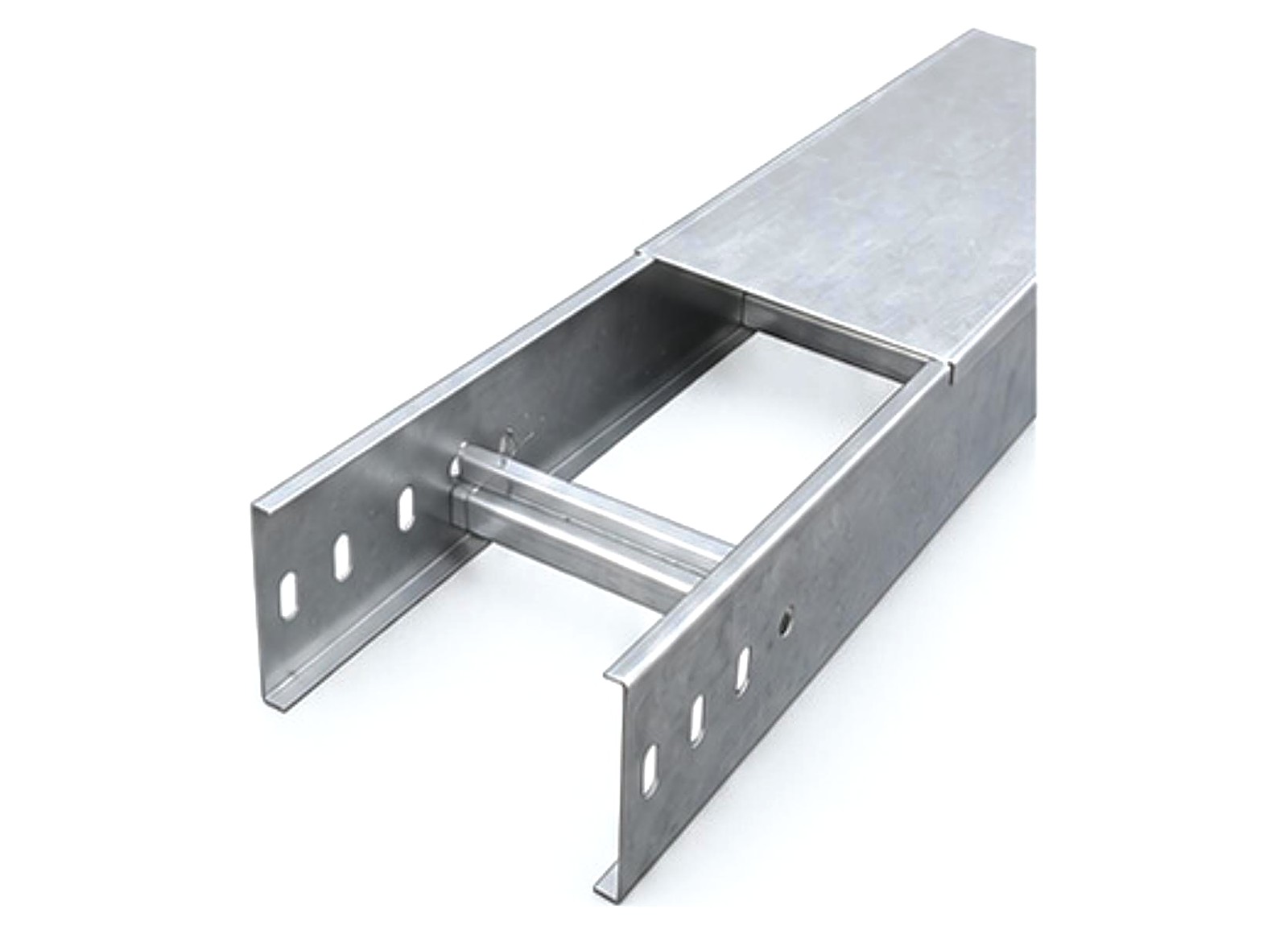
Plan the straight runs before anything else. Straight sections are normally supplied in 3 m lengths, so the run is a series of joints on supports — and the joints should land on or near a support, never mid-span. Lay out the route on the drawing first: main runs, drops to equipment, and the places where the tray changes level or direction. Every change of direction is a fitting, and every fitting is a place to check the load and the fixing.
Choose the tray type for the run before sizing it. Ladder tray is the standard for long straight runs of heavy power cable; perforated tray is the workhorse for mixed power and control bundles indoors. Where cables need protection from dust or water, use a trough tray, normally with a cover.
Support spacing: what decides it
There is no single spacing number that fits every job. Spacing is read off the manufacturer's load chart for the tray type, width and thickness against the cable load — the chart is built on load tests to IEC 61537. Four things move the number:
| Factor | What it changes |
|---|---|
| Cable load | Heavier cables need closer supports for the same tray |
| Tray width | Wider trays carry more cable, so the span shortens for the same load |
| Tray type | Ladder carries more over a span than perforated tray at the same thickness, because the side rails do the work |
| Future additions | Spare capacity left in the tray today is extra load tomorrow — size the supports for the load the tray will carry, not only the load on day one |
If the cable load grows after installation, add supports rather than overloading the span. A tray that sags between supports is a tray that was sized for the wrong load.
The tray itself is part of that load. Use our cable tray weight calculator to estimate the weight per metre of the tray you are hanging, for its type, size and thickness.
Bends, level changes and branches
Use factory-made fittings for changes of direction: 90° and 45° horizontal bends, inside and outside risers for level changes, tees where a branch leaves the main run, and reducers where the width steps down. Factory bends keep the side rails and the load path continuous; a bend cut and folded on site rarely does.
Keep the bend radius generous for the cable, not just for the tray. Power cables tolerate a tighter bend than data and fibre cables, and a bend that is too tight is the most common cause of a cable that fails its test after installation. If the specification names a minimum bend radius, it applies to the cable inside the tray, and the fitting must clear it.
Fixing the tray: rods, brackets and strut
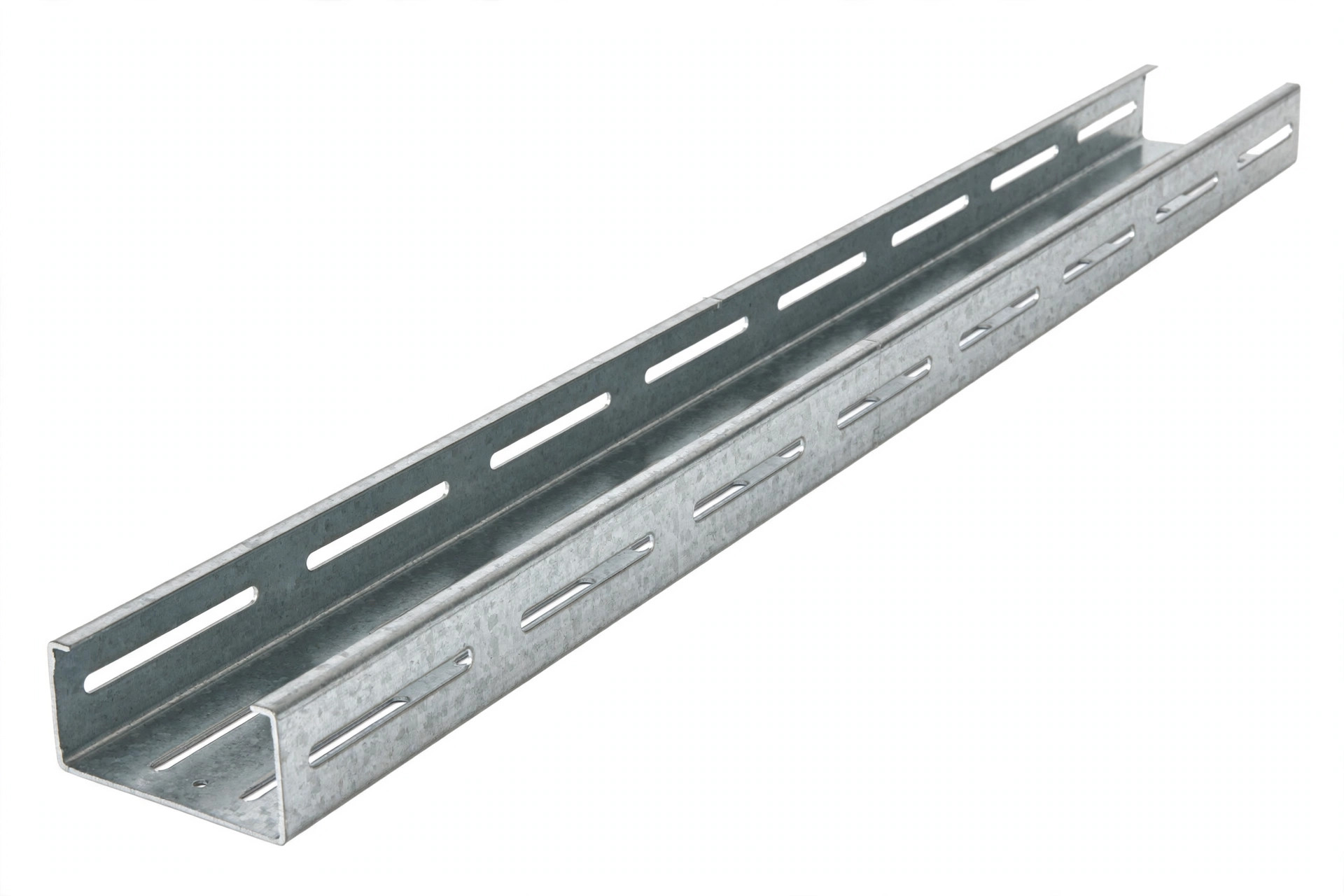
Three fixing methods cover most jobs: threaded rod hangers from the ceiling, cantilever arms on walls, and trapeze frames where several runs share one support. Strut channel is the usual frame for all three — it is the support system the tray hangs from, and it is also used for light tray runs themselves.
Fix the tray to the support at every support point, and fix the support to the structure — not to a ceiling tile, a duct, or another service. Where the run is long, allow for thermal movement: long straight runs need an expansion gap at intervals, or the tray will push against its fixings as temperatures change.
Earthing and continuity
A cable tray system is earthed as one continuous metal run. Joints are bonded with couplers and bonding jumpers so the whole run is electrically continuous, and the run is connected to the building earth at the points the specification names. The exact method follows the project specification — send it with the BOQ and the earthing method is confirmed on the quotation, with the jumpers and couplers listed as separate lines.
Installing a tray system?
Send your layout or BOQ — Jason replies personally with a priced offer, and the thickness is calculated for your load and span rather than estimated.
Frequently asked questions
How far apart should cable tray supports be?
There is no single number. Spacing is read off the manufacturer load chart for the tray type, width and thickness against the cable load, tested to IEC 61537. Heavier loads and wider trays need closer supports; if the load grows later, add supports rather than overloading the span.
Do I need covers on outdoor cable tray?
Normally yes. A cover keeps out rain, dust and falling debris, and a trough tray with a cover is the safer choice where the run is exposed. Indoors, covers are ordered where the specification calls for them.
Can cable tray be cut on site?
Yes. Straight sections and wire mesh are routinely cut on site, and mesh is easy to cut and bend. Cut edges on galvanized tray should be touched up so the zinc layer stays intact, and factory-made bends are still the cleaner choice for changes of direction.
How is a cable tray system earthed?
The tray is bonded across joints with couplers and bonding jumpers so the whole run is electrically continuous, then connected to the building earth per the project specification. Send the specification with the BOQ and the method is confirmed on the quotation.
Get a quotation for your project
Send your BOQ or drawings and the tray type, size, finish, and quantity you need. Quotations are prepared per BOQ — no fixed price list — and cover trays, fittings, and accessories to match. WhatsApp: +86 195 6350 7326 · Email: [email protected]