
There are six cable tray types in common use: ladder, perforated, trough (solid bottom), wire mesh, FRP, and strut channel systems. Ladder and perforated trays carry most power and control cable runs. Trough protects cables where dust, water, or interference is a concern. Wire mesh suits light data and instrumentation cables. The right choice depends on cable load, environment, and how often cables will be added or changed.
The six types at a glance
| Type | Structure | Best for | Watch out |
|---|---|---|---|
| Ladder | Two side rails with rungs | Long straight runs, heavy power cables, good ventilation | Open bottom — no protection from dust or falling debris |
| Perforated | Tray base with ventilation holes | Power and control cables indoors, general industrial use | Holes reduce load capacity against solid bottom at the same thickness |
| Trough (solid bottom) | Solid sheet bottom | Dusty, wet, or outdoor runs; shielding sensitive cables | Heavier; heat builds up when cables are densely packed |
| Wire mesh | Welded steel wire basket | Data, instrumentation, and light cables; easy to cut and bend on site | Not for heavy power cables or long unsupported spans |
| FRP | Fibreglass reinforced plastic | Corrosive environments, chemical plants, coastal sites | Higher cost; check the temperature limit of the resin used |
| Strut channel | C-shaped steel channel with fittings | Support systems, hanging, framing, and light tray runs | A support system first — confirm it is rated for your cable load |
Ladder type cable tray
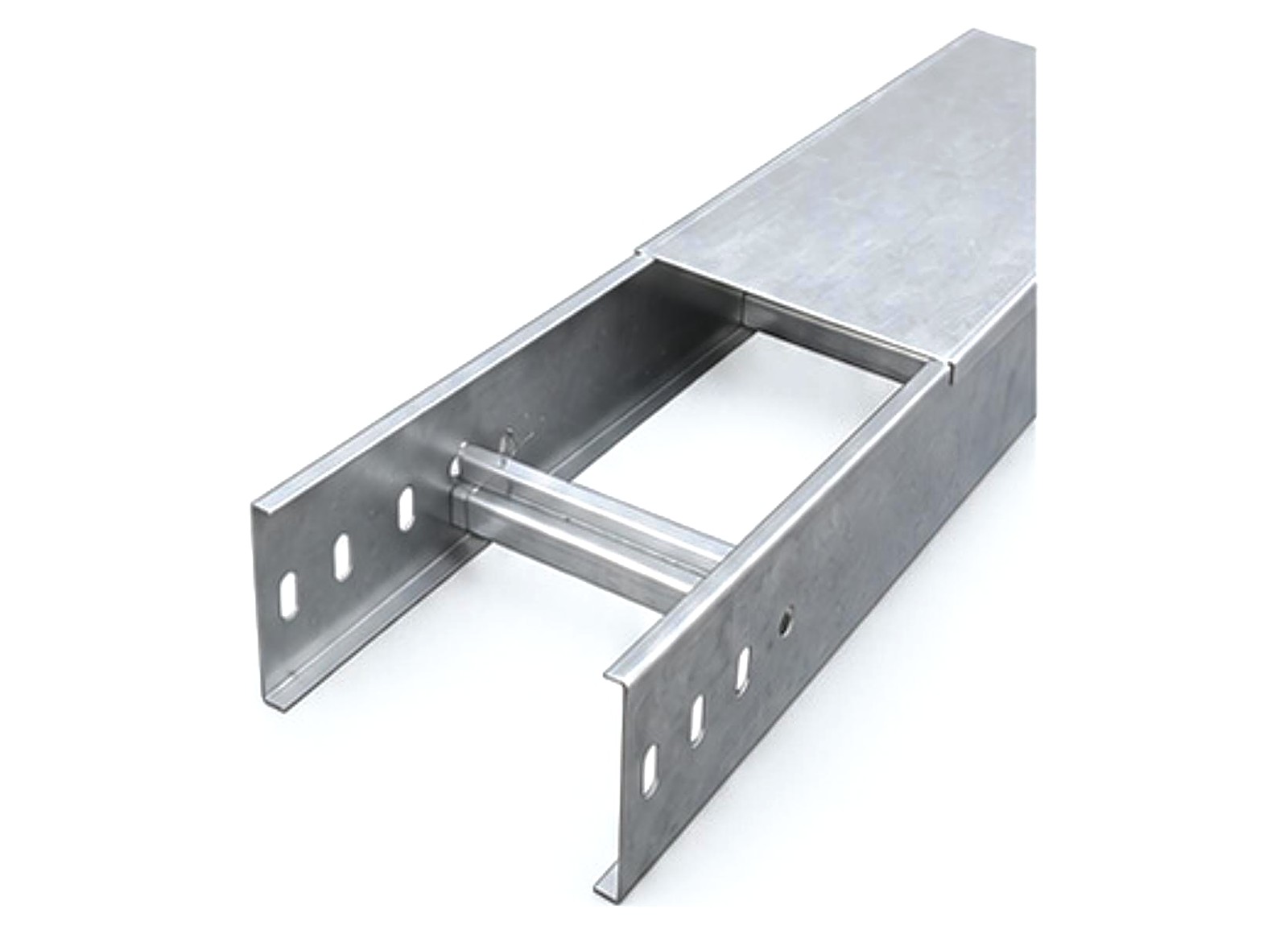
A ladder tray is two side rails joined by rungs. It is the standard choice for long straight runs of heavy power cable: the open structure ventilates well, so cables run cooler, and rungs make it easy to tie cables down and to add or remove cables later. For the same width and thickness, ladder trays generally carry more load than perforated trays, because the side rails do the work.
Ladder trays are made in widths from 50 mm to 1200 mm and heights from 10 mm to 200 mm, in thicknesses from 0.5 mm to 3.0 mm. Common finishes are pre-galvanized and hot-dip galvanized; stainless steel 304 and 316 are used where corrosion resistance is specified. If the run is outdoors or exposed, the cover is normally ordered with the tray.
Perforated cable tray
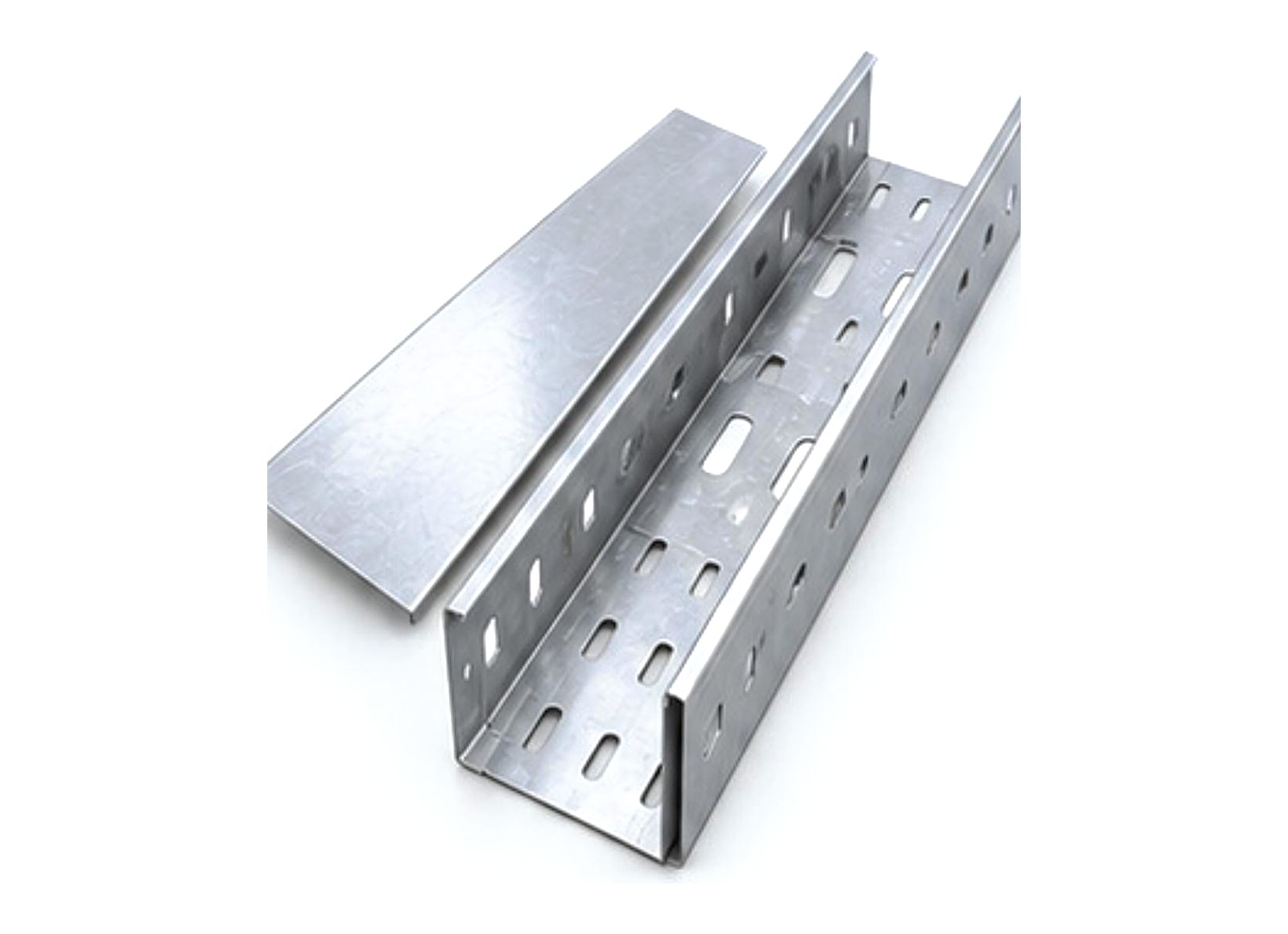
A perforated tray is a sheet tray with ventilation holes punched through the base and sides. It is the workhorse of indoor industrial and commercial projects: it supports cables along their full length, keeps them tidy, and still allows air to circulate. It is also the most common choice when the specification calls for a closed-looking tray that is not fully solid.
Perforated trays suit power and control cables. Where the cable fill is heavy or the span between supports is long, check the load against the thickness — perforation removes material, so a perforated tray of the same thickness carries less than a solid-bottom tray. Covers, dividers, and bends are available in matching sizes.
Trough (solid bottom) cable tray
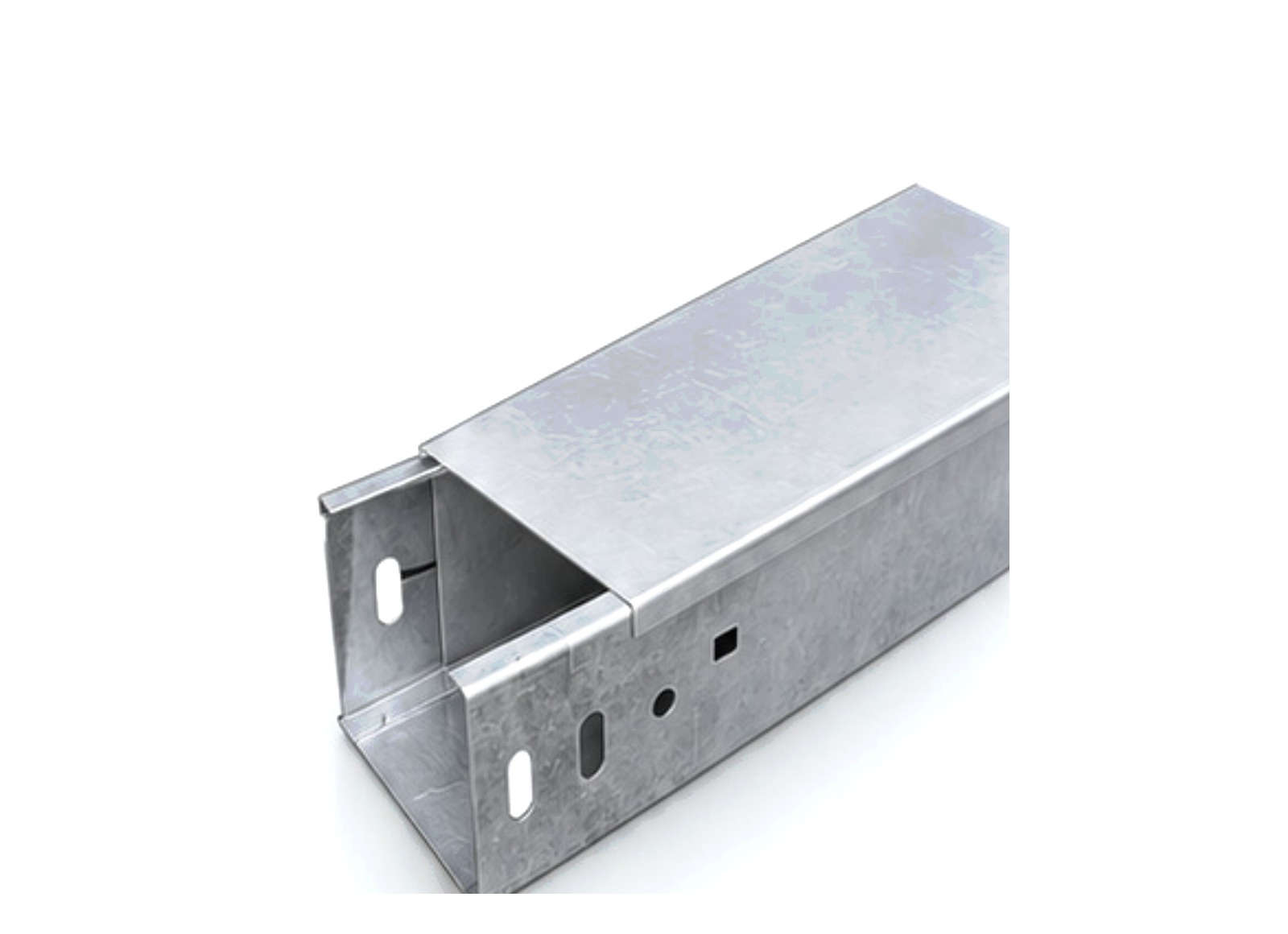
A trough tray has a solid sheet bottom and solid sides. It is used where cables need protection: dusty plants, wet areas, outdoor runs, and places where electromagnetic interference from nearby equipment must be shielded. It also stops small objects from falling through onto equipment below.
The trade-off is weight and heat. A solid tray is heavier than a perforated tray of the same size, and densely packed cables have less air around them, so derating may be needed. Trough trays are usually supplied with covers, and they are a common choice for instrument and control cables in process plants.
Wire mesh cable tray
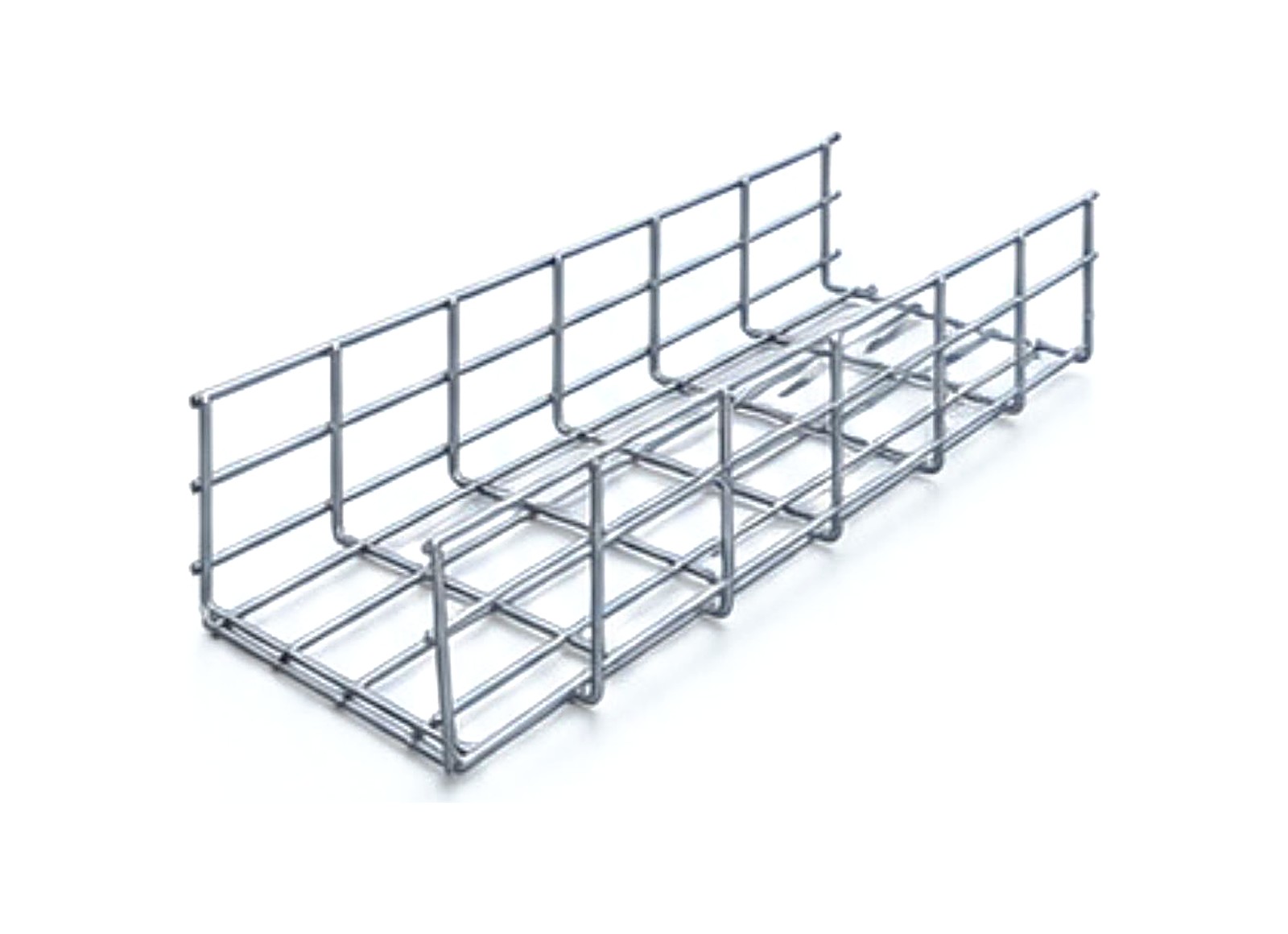
A wire mesh tray is a basket made from welded steel wire, typically 3.5 mm to 6.0 mm in diameter. It is light, easy to cut and bend on site, and quick to install — which is why it is popular for data, telecom, and instrumentation cables in commercial buildings and data centers.
Wire mesh is not a heavy power cable tray. Span between supports is shorter than for ladder or perforated trays, and the basket does not protect cables from dust or falling objects. It is at its best as a data cable system, or as a lightweight tray where cables change often. It can be supplied in electro-galvanized, hot-dip galvanized, stainless steel, or powder coated finishes.
FRP cable tray
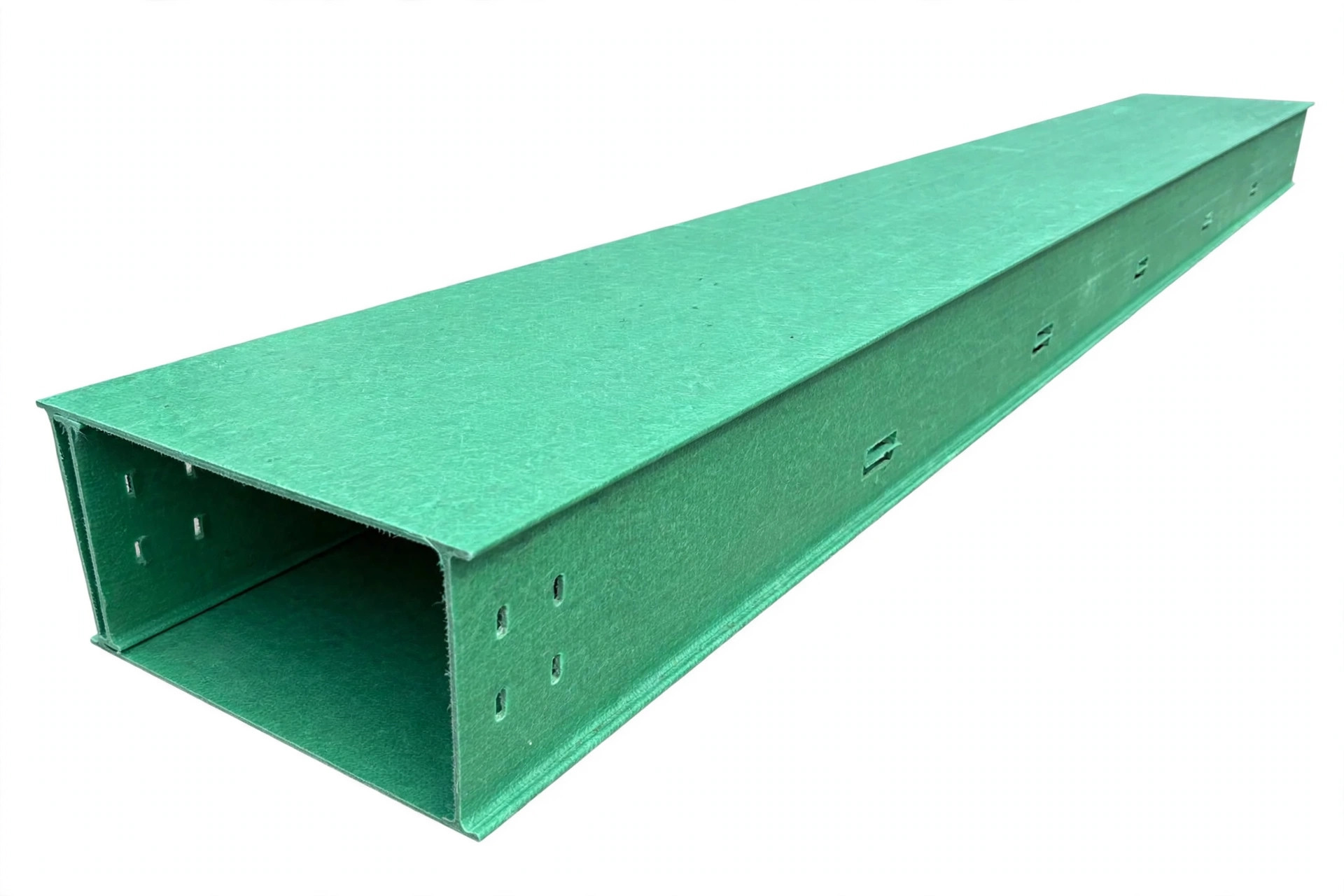
FRP (fibreglass reinforced plastic) trays are used where steel corrodes: chemical plants, wastewater treatment, coastal and offshore sites. They are non-conductive, non-magnetic, and resistant to most chemicals. FRP is available as ladder and trough profiles.
FRP costs more than galvanized steel, and the resin system sets the temperature limit, so the operating temperature must be confirmed before ordering. Where the environment is only mildly corrosive, hot-dip galvanized or stainless steel is usually the cheaper answer.
Strut channel
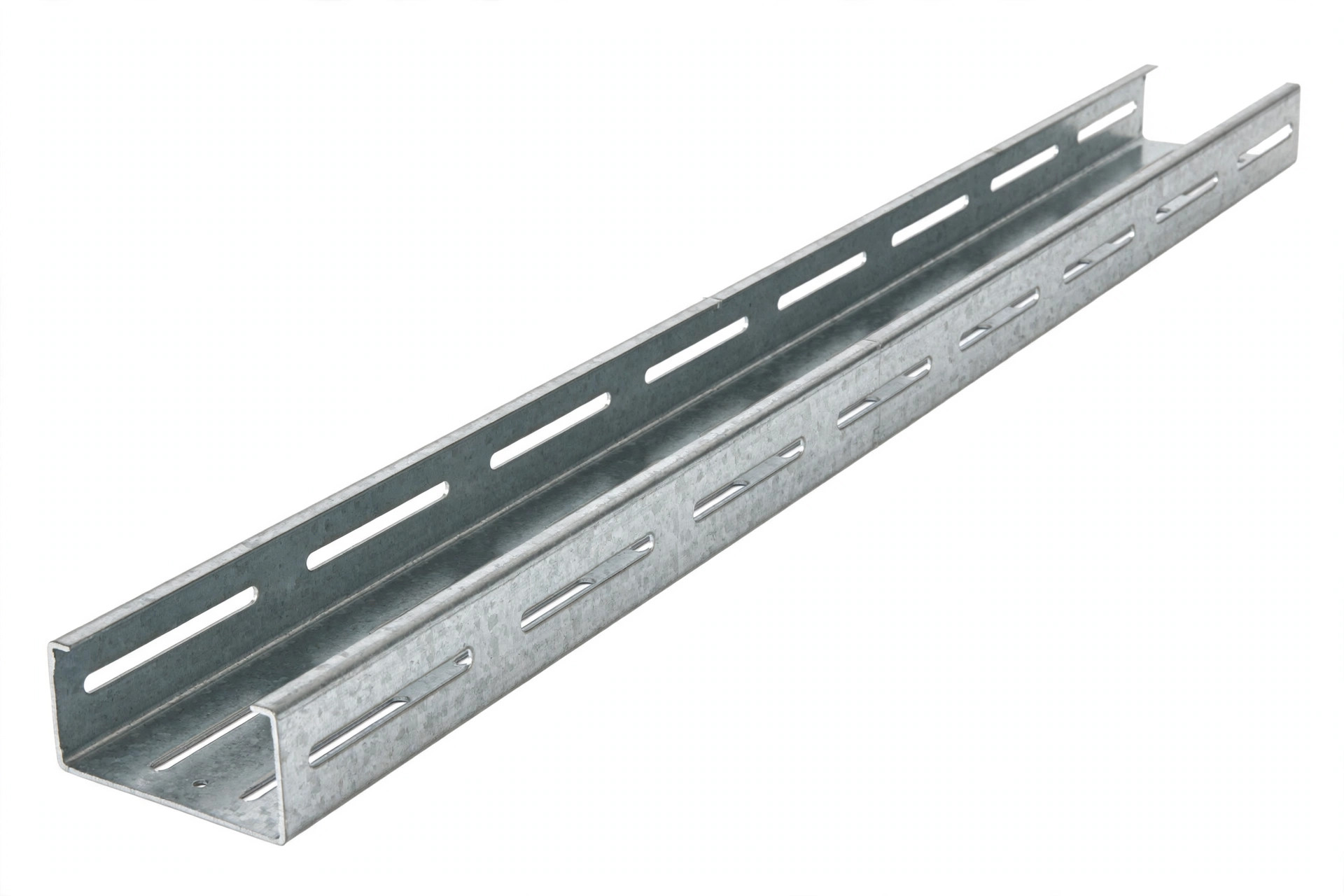
Strut channel is a C-shaped steel channel used with fittings to build support systems: hanging trays, framing, and mounting electrical equipment. It is also used for light tray runs. It is a support system first — confirm the channel and its fittings are rated for your cable load before using it as the tray itself.
How to choose in four questions
1. What cables, and how heavy? Heavy power cables on long runs point to ladder. Light data and instrumentation cables point to wire mesh. Everything in between is usually perforated or trough.
2. Where is it installed? Indoors and dry: perforated or ladder. Outdoors, dusty, or wet: trough with cover, hot-dip galvanized. Corrosive: FRP, stainless steel 316, or hot-dip galvanized with a heavier zinc coating. Cable trays are available with hot-dip galvanized coatings of 45, 65, and 85 μm.
3. Will cables be added later? If the system will grow, choose an open type — ladder or wire mesh — with room to spare. A solid tray that is full on day one is hard to extend.
4. What does the project specification require? Many projects specify a standard (IEC 61537 / BS EN 61537), a finish, and a fire rating. Send the specification with your inquiry and the tray can be matched to it rather than guessed.
Not sure which type fits your project?
Send your BOQ or drawings — Jason replies personally with a priced offer, and the thickness is calculated for your load rather than estimated.
Frequently asked questions
Which cable tray type is best for outdoor use?
Hot-dip galvanized perforated or trough tray, normally with a cover. Trough is the safer choice where rain, dust, or falling debris is a problem; perforated is enough where the run is sheltered and ventilation matters.
Which type is used in data centers?
Wire mesh for data and network cables, ladder for the power feeds. This combination is common in data center builds, including a data center project supplied in Singapore.
Can I mix tray types in one project?
Yes, it is normal. A typical project uses ladder for main runs, perforated for branches, and wire mesh for data cables. Use matching fittings — bends, tees, crosses, reducers, and covers — so the transitions are clean.
What thickness do I need?
It depends on width, support span, and cable load. Tray thickness ranges from 0.5 mm to 3.0 mm. Send your BOQ with widths, spans, and cable types, and the thickness can be calculated for your load rather than estimated.
Do you supply the fittings?
Yes. Bends, tees, crosses, reducers, end caps, covers, couplers, and brackets are supplied to match the tray type, size, and finish.
Get a quotation for your project
Send your BOQ or drawings and the tray type, size, finish, and quantity you need. Quotations are prepared per BOQ — no fixed price list — and cover trays, fittings, and accessories to match. WhatsApp: +86 195 6350 7326 · Email: [email protected]