
Perforated and solid bottom cable trays carry the same cables, but they treat them differently. A perforated tray has slots in the bottom and sides, so air moves through and heat escapes; a solid bottom tray has a closed steel base, so it shields the cables from dust, drips and falling objects. Choose perforated where cables run hot and the air is clean, and solid bottom where the run needs protection.
| Feature | Perforated cable tray | Solid bottom cable tray |
|---|---|---|
| Bottom | Slots punched in the base and sides | Closed steel base, no openings |
| Ventilation | Air flows through; heat escapes | Heat stays in the tray longer |
| Protection | Open to dust and drips from above | Shields cables from dust, drips and falling objects |
| Cable fixing | Ties pass through the slots anywhere | Ties fix to the side rails or a divider |
| Typical use | Indoor power and control runs | Outdoor runs, dusty plants, public areas |
What a perforated cable tray is
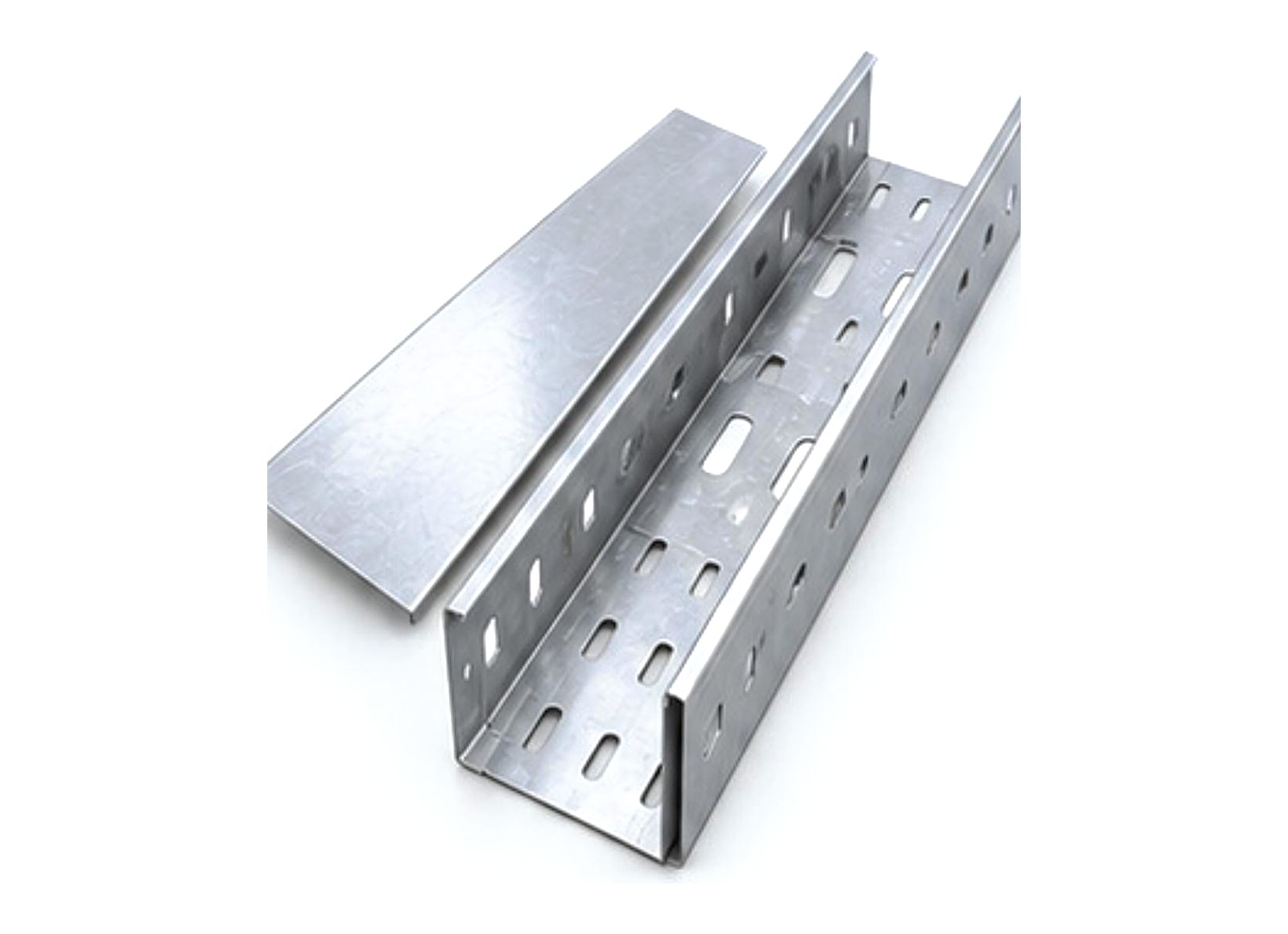
A perforated cable tray is a steel tray with rows of slots punched through the bottom and the side walls. The slots do three jobs: they let air move around the cables, they give cable ties a fixing point anywhere along the run, and they let water drain out instead of pooling in the tray. It is the standard choice for indoor power and control cable runs, and the type most buyers order first.
Perforated tray is made to the same catalog range as the rest of the system: 50–1200 mm wide, 10–200 mm high and 0.5–3.0 mm thick, in pre-galvanized, hot-dip galvanized, stainless steel 304/316, aluminum and powder coated finishes. Bends, tees, crosses and reducers are made to match the same width, height and finish.
What a solid bottom cable tray is
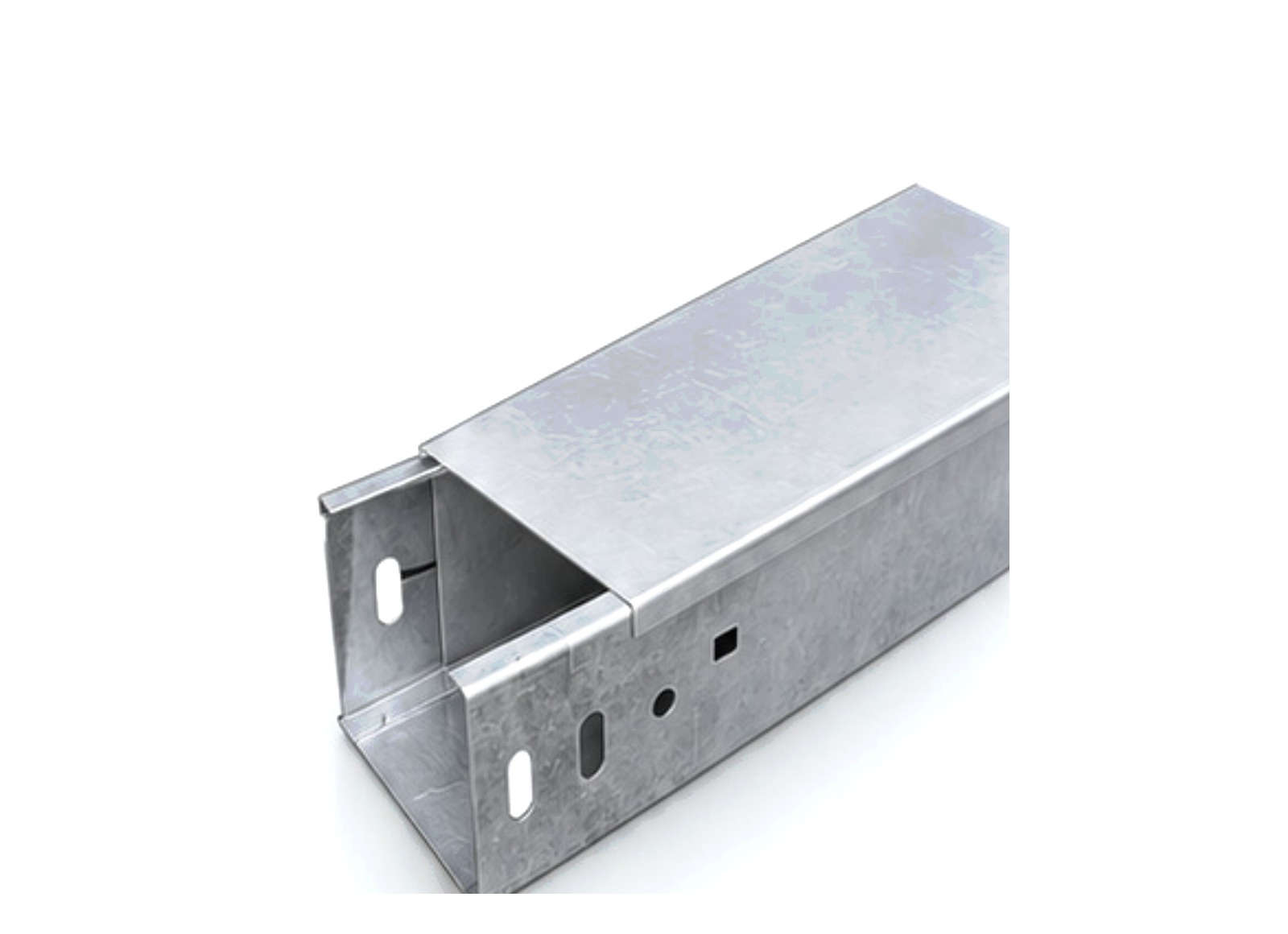
A solid bottom tray — also called a trough tray — is the same steel tray with a closed base. There are no openings in the bottom, so nothing falls through and nothing drips in from below. The trough cable tray is the choice where the cables themselves need shielding: above a walkway, over production equipment, or in a plant where dust and debris fall from above.
The closed base also makes the tray stiffer along its length, which helps on longer support spans, but the span itself is still set by the specification and the tray thickness — it is confirmed against the specification and the BOQ, not guessed from the type alone.
Ventilation and heat: the main difference
This is the decision that matters most. Power cables generate heat, and heat is what limits how much current a cable can carry. In a perforated tray, air flows through the slots and around the cables, so heat leaves the run continuously. In a solid bottom tray, the heat has only the open top to escape through, so the cables run warmer for the same load.
That makes perforated tray the choice for heavily loaded power runs indoors, where the air is clean and the cables are the hottest part of the system. It also suits data and control cables, which are light but numerous — the slots keep the bundle ventilated and give every tie a fixing point. Where the specification sets a maximum cable temperature or a derating factor, the tray type is part of that calculation, so send the specification with the BOQ.
Protection: dust, drips and falling objects
A solid bottom tray earns its place where the environment attacks from above. In a cement plant, a steel mill or a food plant, dust settles on everything; a perforated tray lets it fall through onto the cables, while a solid bottom tray keeps the cables clean underneath. Outdoors, rain and condensation drip from the tray above — a solid bottom tray with a cover keeps the run dry, while a perforated tray lets water through and drains it away.
There is a trade-off to weigh. A solid bottom tray that collects dust on its base still needs cleaning, and a perforated tray in a dusty plant needs the cables cleaned instead. Neither type removes maintenance; the question is where the dirt lands. Where the run passes above people, walkways or sensitive equipment, the solid bottom tray is the safer choice, because nothing can fall through it.
Fixing cables inside the tray
Cables must be fixed so they do not move when the run vibrates. In a perforated tray, a cable tie passes through any slot, so the fixing point is wherever the installer needs it. In a solid bottom tray, ties fix to the side rails or to a divider — so the fixing positions are planned in advance. Dividers are worth ordering where power and data cables share one tray; list them as a separate line on the BOQ.
Which one where
Most projects use both. A typical split is perforated tray for the indoor main runs and branches, where ventilation matters and the air is clean, and solid bottom tray for the outdoor sections, the dusty areas and the runs above walkways. A cable ladder often takes the heaviest main runs, with perforated or trough tray branching off it — the three types join with matching fittings, so a mixed run is normal, not a compromise.
Sizes, finishes and ordering
Both types are supplied in the same catalog range — 50–1200 mm wide, 10–200 mm high, 0.5–3.0 mm thick — and in the same finishes: pre-galvanized, hot-dip galvanized, stainless steel 304/316, aluminum and powder coated. The finish is chosen for the environment, not for the tray type: hot-dip galvanized for outdoor and coastal work, stainless steel where corrosion is severe, powder coated where the colour must match the building.
Both types follow the cable tray standard IEC 61537, which covers cable tray systems and cable ladder systems including their performance and test requirements (IEC 61537). Order by BOQ: tray type, width, height, thickness, finish and length, plus the fittings — bends, tees, crosses, reducers and end caps — each on its own line. Quotations are prepared per BOQ, and the tray thickness and support spacing are confirmed against the specification before the quotation is issued. To estimate the weight of a run for freight before you order, use our cable tray weight calculator.
Not sure which type your project needs?
Send your BOQ with the tray type, sizes and the areas each run passes through — Jason replies personally with a priced offer, perforated and solid bottom on separate lines.
Frequently asked questions
Can perforated and solid bottom trays be used in the same run?
Yes. It is normal to mix them: perforated indoors where ventilation matters, solid bottom outdoors or above walkways where protection matters. Use matching fittings at the changeover so the transition is clean.
Does a solid bottom tray need a cover?
Not always, but a cover is common on outdoor solid bottom runs, where it keeps rain and dust off the cables. A cover is ordered as a separate line, in the same finish as the tray, with cover clips to hold it in place.
Which type is better for data cables?
Perforated tray, in most cases. Data cables are light and numerous, and the slots ventilate the bundle and give every tie a fixing point. Use a divider where data cables share a tray with power cables.
How do I specify the tray on a BOQ?
List the type, width, height, thickness, finish and length for each run, then the fittings — bends, tees, crosses, reducers and end caps — each on its own line. Send the specification with the BOQ so the thickness and support spacing are confirmed on the quotation.
Get a quotation for your project
Send your BOQ or drawings and the tray type, size, finish, and quantity you need. Quotations are prepared per BOQ — no fixed price list — and cover trays, fittings, and accessories to match. WhatsApp: +86 195 6350 7326 · Email: [email protected]