
Straight tray is the easy part of a cable tray system. The system is made — or broken — by the fittings: the bends that turn it, the tees that branch it, the reducers that step it down. Order the wrong fitting and the run stops at the first corner. This guide explains each fitting, what it does, and how to match it to your tray.
| Fitting | What it does | Use it when |
|---|---|---|
| Bend | Turns the run, 90° or 45°, horizontal or vertical | Every change of direction or level |
| Tee | Branches one run off the main run | A branch leaves the main route |
| Cross | Crosses two runs, four directions | Two routes cross at one point |
| Reducer | Steps the tray width down | The cable load drops and the tray narrows |
| End cap | Closes the end of a run | A run ends at a wall or equipment |
Bends: horizontal and vertical
A bend turns the run. Horizontal bends change direction on the same level — 90° for a corner, 45° where the route turns gently. Vertical bends change level: an inside riser where the tray climbs, an outside riser where it drops. The bend is made from the same tray as the run — same type, same width, same finish — so the side rails and the load path stay continuous through the turn.
The radius matters more than the angle. A bend that is too tight for the cable inside it is the most common cause of a cable that fails its test after installation, and fibre needs a larger radius than copper or power cable. If the specification names a minimum bend radius, the fitting must clear it.
Tees and crosses: branching the run
A tee branches one run off the main run: the main route continues straight and a second route leaves at 90°. A cross does the same in four directions, where two routes cross at one point. Both are factory-made to the same width and finish as the tray they join, so the branch keeps the same load capacity as the run it leaves.
Count the fittings from the layout drawing, not from memory: every branch on the drawing is a tee, every crossing is a cross. A fitting missed at ordering time is a fitting cut on site — and a site-made branch never matches a factory one.
Reducers: stepping the width down
As a run branches off, the cable load drops and the tray can narrow — that is what a reducer does. A left-hand reducer steps one side down, a right-hand reducer the other, and a centre reducer steps both sides evenly. The reducer matches the larger width on one end and the smaller width on the other, in the same type and finish as the tray.
Order reducers with the tray, not after it: the width step is part of the route design, and the tray sizes on either side of the reducer are fixed by it.
End caps, covers and couplers
An end cap closes the end of a run where it stops at a wall or a piece of equipment. Covers go over the tray where the run needs protection — outdoors, in dusty plants, or where the specification calls for them — and cover clips hold them in place. Couplers join straight sections together, and bonding jumpers across the joints keep the whole run electrically continuous.
These small parts are the ones most often forgotten at ordering time. List them on the BOQ as separate lines — jumpers, clips, dividers, couplers — so the installation crew has everything on site on day one.
Matching the fitting to the tray
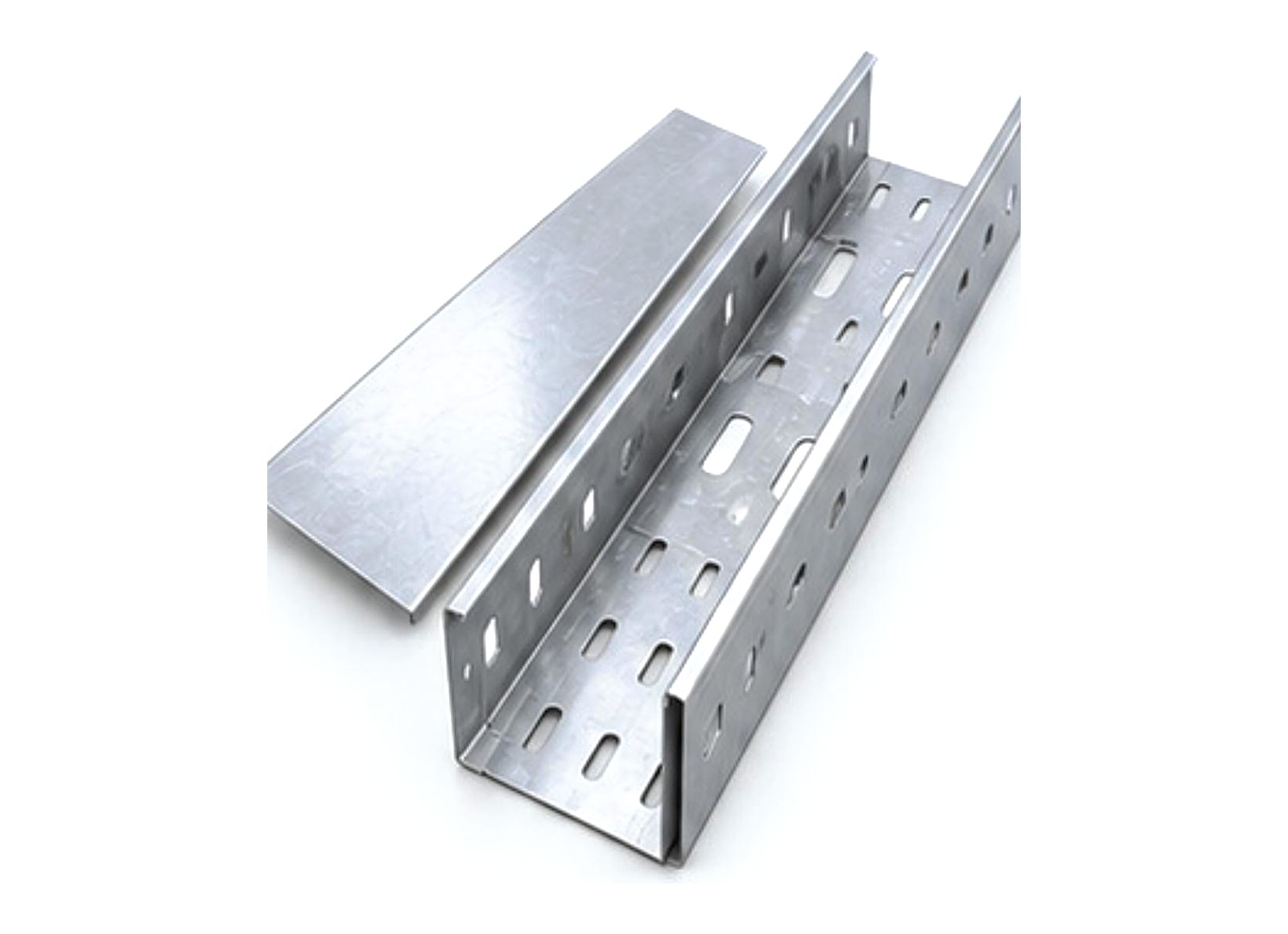
Three things must match: type, size and finish. A ladder bend goes on a ladder run; a perforated tee goes on a perforated run; a trough reducer goes on a trough run. The width and height match the tray on both ends of the fitting, and the finish matches the tray — pre-galvanized, hot-dip galvanized, stainless steel or powder coated — so the whole run weathers the same way.
Send the fitting schedule with the BOQ: the count of each fitting by type, size and finish. Quotations are prepared per BOQ, and fittings are priced as separate lines — bends, tees, crosses, reducers and end caps each on their own line — so the count on the drawing is the count on the quotation.
Have a fitting list?
Send your BOQ with the fitting counts by type, size and finish — Jason replies personally with a priced offer, fittings on separate lines.
Frequently asked questions
Do fittings come in the same finish as the tray?
Yes. Fittings are supplied to match the tray type, size and finish — pre-galvanized, hot-dip galvanized, stainless steel or powder coated — so the whole run weathers the same way. Always order the fitting in the same finish as the tray it joins.
What bend radius should I order?
The radius is set by the cable, not the tray. Power cables tolerate a tighter bend than data and fibre cables. If the specification names a minimum bend radius, the fitting must clear it — send the specification with the BOQ and the radius is confirmed on the quotation.
Can I mix tray types in one run?
Yes, it is normal. A typical project uses ladder for main runs, perforated for branches and wire mesh for data cables. Use matching fittings — bends, tees, crosses, reducers and covers — so the transitions between types are clean.
Are couplers and bolts included with the fittings?
Couplers are the standard joint for straight sections; fittings are joined the same way. Bonding jumpers, dividers and cover clips are ordered as separate lines — list them on the BOQ so nothing is missed at installation.
Get a quotation for your project
Send your BOQ or drawings and the tray type, size, finish, and quantity you need. Quotations are prepared per BOQ — no fixed price list — and cover trays, fittings, and accessories to match. WhatsApp: +86 195 6350 7326 · Email: [email protected]