
Aluminum cable tray is the light, corrosion-resistant, non-magnetic option: a fraction of the weight of steel, with corrosion resistance in the alloy itself and no effect on the signals of the cables it carries. It fits food plants, data and communication rooms, coastal sites and weight-limited structures. Heavy loads over long spans still belong on steel — unless the aluminum is an extruded profile, which is the long-span form.
| Question | Aluminum tray | Steel tray |
|---|---|---|
| Weight | A fraction of steel weight — lighter supports and easier handling | Heavier — needs stronger supports and more labour to install |
| Corrosion | Resists in the alloy itself, does not rust | Depends on the coating — galvanized, ZAM or stainless |
| Magnetism | Non-magnetic, does not distort cable signals | Magnetic — can affect sensitive signals |
| Finish | Mill-finish, no applied coating | Pre-galvanized, hot-dip galvanized, ZAM or powder coated |
| Long spans | Extruded profiles for long-span runs | Ladder rails carry heavy loads over long spans |
| Cost per metre | Usually more than the same size in steel | Usually less per metre |
| Typical use | Food plants, data rooms, coastal and weight-critical sites | Heavy power runs, general industrial routes |
What aluminum cable tray is
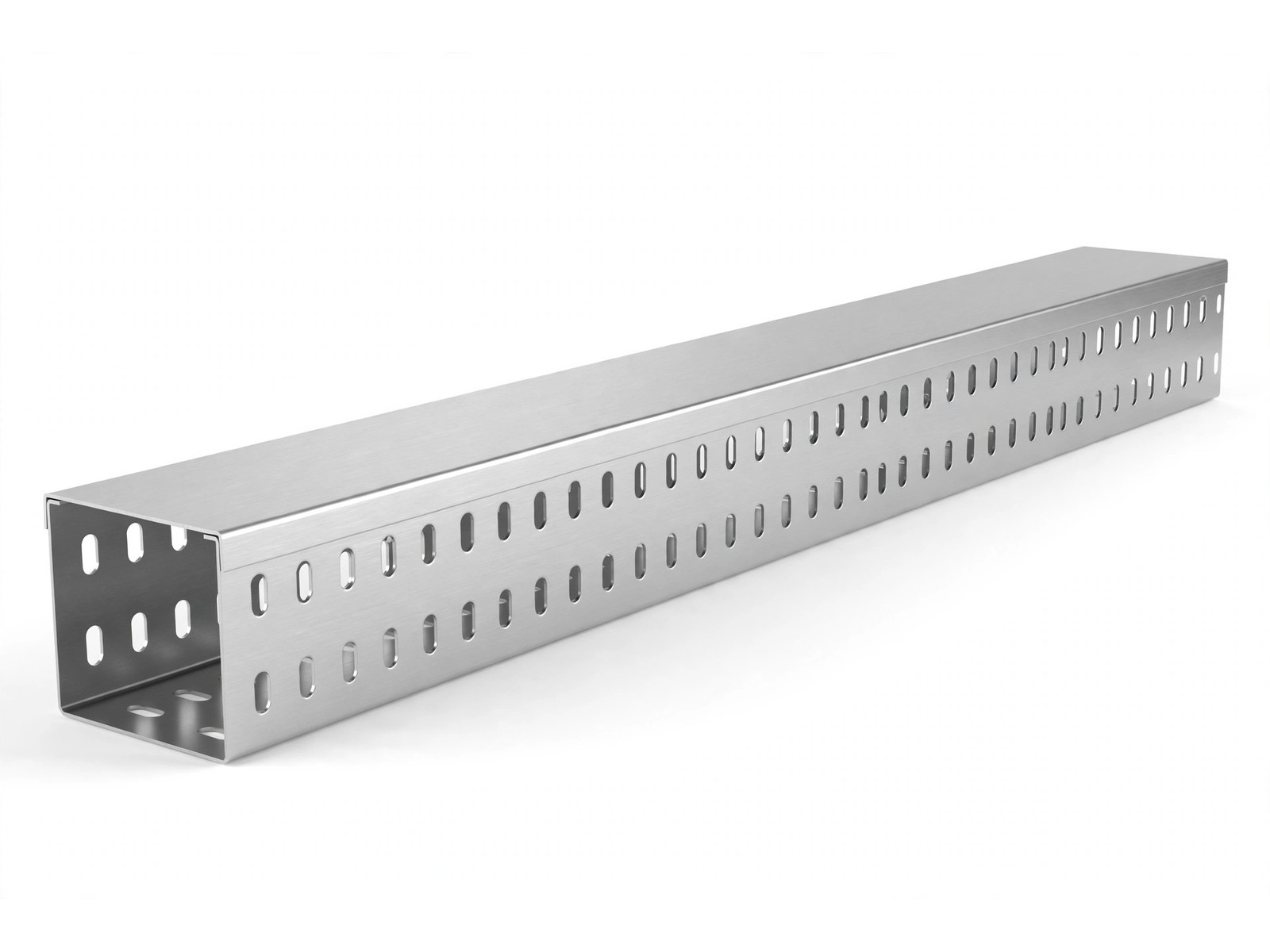
Aluminum cable tray is made from aluminum alloy, not steel. Our range is produced in two alloys, 6061-T6 and 6063-T5, in two forms: sheet-formed tray, made the same way as steel tray, and extruded profiles, which are the form used for long-span runs. Both forms come with matching covers and fittings, so a run never mixes materials at the joints.
The finish is mill-finish aluminum — no applied coating. That is a real difference from steel tray, where the finish is a layer applied on top of the metal. Aluminum forms its own protective surface, so there is no coating to be cut, scratched or worn through. Fittings — bends, tees, crosses, reducers and covers — are produced in aluminum alloy to match the straights, keeping the run one material throughout. That matters where contact between different metals is a design concern.
Why buyers choose aluminum
Weight is the first reason. Aluminum tray is a fraction of the weight of the same size in steel, so the supports can be lighter, the hangers smaller, and the sections easier to carry and fix — on a roof, a lightweight structure or a high ceiling, that changes the installation completely. A crew can handle longer lengths by hand, and the structure below carries less dead load. Where the building or the structure sets a weight limit, aluminum is often the only tray that fits it.
Corrosion resistance is the second reason. Aluminum does not rust: the resistance is in the alloy itself, not in a coating that fails at cut edges and drilled holes. In coastal air, food plants and washdown areas, that is a lasting advantage over coated steel, where every cut edge is a place for rust to start. It is also why aluminum is specified in food plants and technology factories, where a clean appearance and a cleanable surface matter as much as the corrosion itself.
The third reason is magnetism. Aluminum is non-magnetic and does not shield or distort the signals of the cables it carries, which is a standard specification in communications and data facilities. In a data room or a communications installation, the tray should not be part of the signal problem — aluminum tray is not.
Where aluminum fits
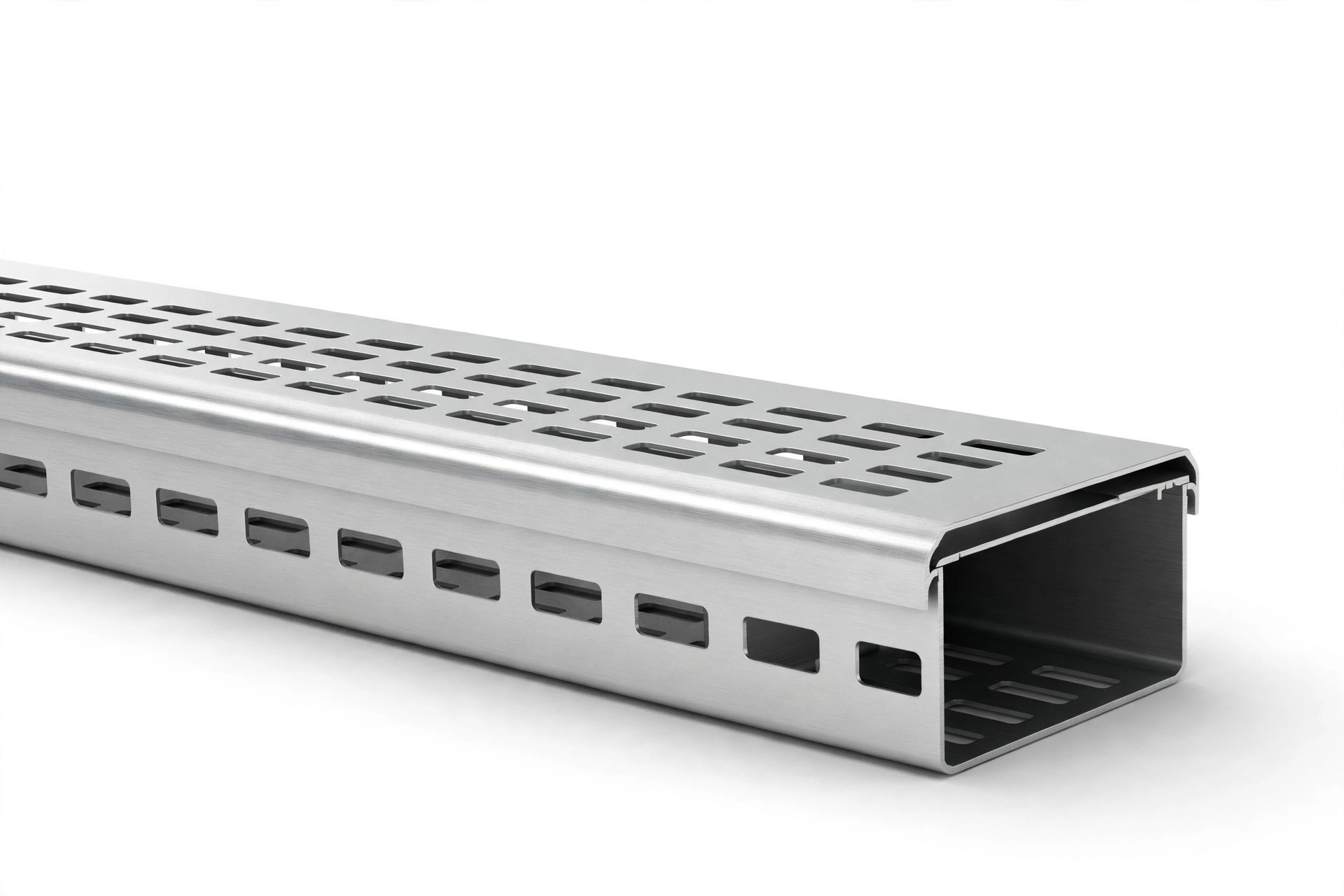
Food plants are the classic case: washdowns, cleanable surfaces, no rust, and a neat mill-finish appearance. Technology factories and data and communication rooms come next, for the non-magnetic property and the clean finish. Coastal and weight-critical installations follow — anywhere the air attacks steel and the structure cannot carry steel's weight.
Aluminum also fits anywhere the tray is visible and has to look finished. The mill-finish silver surface is clean and consistent, and because there is no applied coating there is no colour variation between batches to manage. Where a project wants a uniform appearance across a long visible run, aluminum delivers it without a powder-coating step.
Where steel still wins
Steel wins where the load is heavy and the span is long. A steel cable ladder carries heavy power cables further between supports than a sheet-formed aluminum tray, and for the heaviest main runs it is still the right choice. The exception is the extruded aluminum profile, which is the long-span form of aluminum tray — for a long span in aluminum, specify the extruded profile, not the sheet-formed section.
Steel also wins on price per metre. Aluminum tray usually costs more than the same size in steel, so the comparison has to include the supports and the installation: lighter supports, smaller hangers, faster handling and less structural load can close the gap on a weight-limited job, but on a straightforward industrial route with no weight limit, steel is the cheaper answer. Our cable tray finishes compared guide sets out where each steel finish belongs, and a hot-dip galvanized steel tray is the usual answer where the environment is mild and the load is heavy.
Specifying aluminum on a BOQ
State the alloy and the form. 6061-T6 and 6063-T5 are the two alloys, and the form — sheet-formed or extruded profile — decides whether the section suits a general run or a long span. State the width, height and thickness the same way as for steel, and the fittings: bends, tees, crosses, reducers and covers, all in aluminum to match.
State the environment and the span as well, because the section and alloy are selected for the span and the load. There is no published load table for aluminum tray on this site: the section is selected per span and load and confirmed with your quotation, never read off a steel table. Send the width, the span, the cable load and the environment, and the quotation states the section and alloy selected for that duty — in writing, before you commit. The standard that covers tray systems, including aluminum tray, is IEC 61537. Our materials and finishes page lists the full range of materials and coatings.
Weight-limited roof or structure?
Send your BOQ with the span, the cable load and the environment — Jason replies personally with a priced offer, aluminum tray, fittings and covers on separate lines.
Frequently asked questions
Does aluminum cable tray rust?
No. Aluminum forms its own protective surface and does not rust, indoors or out. There is no coating to fail at cut edges, which is why aluminum is specified for coastal sites, food plants and washdown areas.
Is aluminum tray as strong as steel tray?
Not in the same section. Steel carries heavier loads over longer spans. Aluminum is selected by size and alloy for the span and load — extruded profiles are the long-span form — and the section for your run is confirmed with your quotation.
Why is aluminum tray specified in data centers?
Because it is non-magnetic. Aluminum does not shield or distort the signals of the cables it carries, which is a standard specification in data and communication rooms. It is also light, which helps on ceiling-hung runs above server racks.
What alloys are available?
6061-T6 and 6063-T5, in sheet-formed tray and extruded profiles. Fittings and covers are produced in aluminum alloy to match, so the run stays one material throughout.
Does aluminum tray need a coating?
No. The finish is mill-finish aluminum — no applied coating. That is different from steel tray, where the finish is a coating layer. There is no colour to match between batches and no coating to be damaged during installation.
Get a quotation for your project
Send your BOQ or drawings and the tray type, size, finish, and quantity you need. Quotations are prepared per BOQ — no fixed price list — and cover trays, fittings, and accessories to match. WhatsApp: +86 195 6350 7326 · Email: [email protected]