
Cable tray load capacity is not a single number on a data sheet. It is the result of three choices made together: the thickness of the steel, the distance between supports, and the type of tray. Change one, and the other two have to change with it. A tray that carries a heavy power-cable load over a long span is a different tray from one that carries the same cables on closely spaced supports.
| Change | What it does | When to use it |
|---|---|---|
| Thicker material | Carries more load over the same span | Heavy cables, or a span that cannot be shortened |
| Shorter support span | The same tray carries more | Hanger positions are close together, or the load is high |
| Ladder instead of perforated | Side rails and rungs carry heavy loads further | Long spans and heavy power-cable runs |
| Narrower tray | Less cable weight per metre of run | The cable schedule allows a smaller width |
What cable tray load capacity means
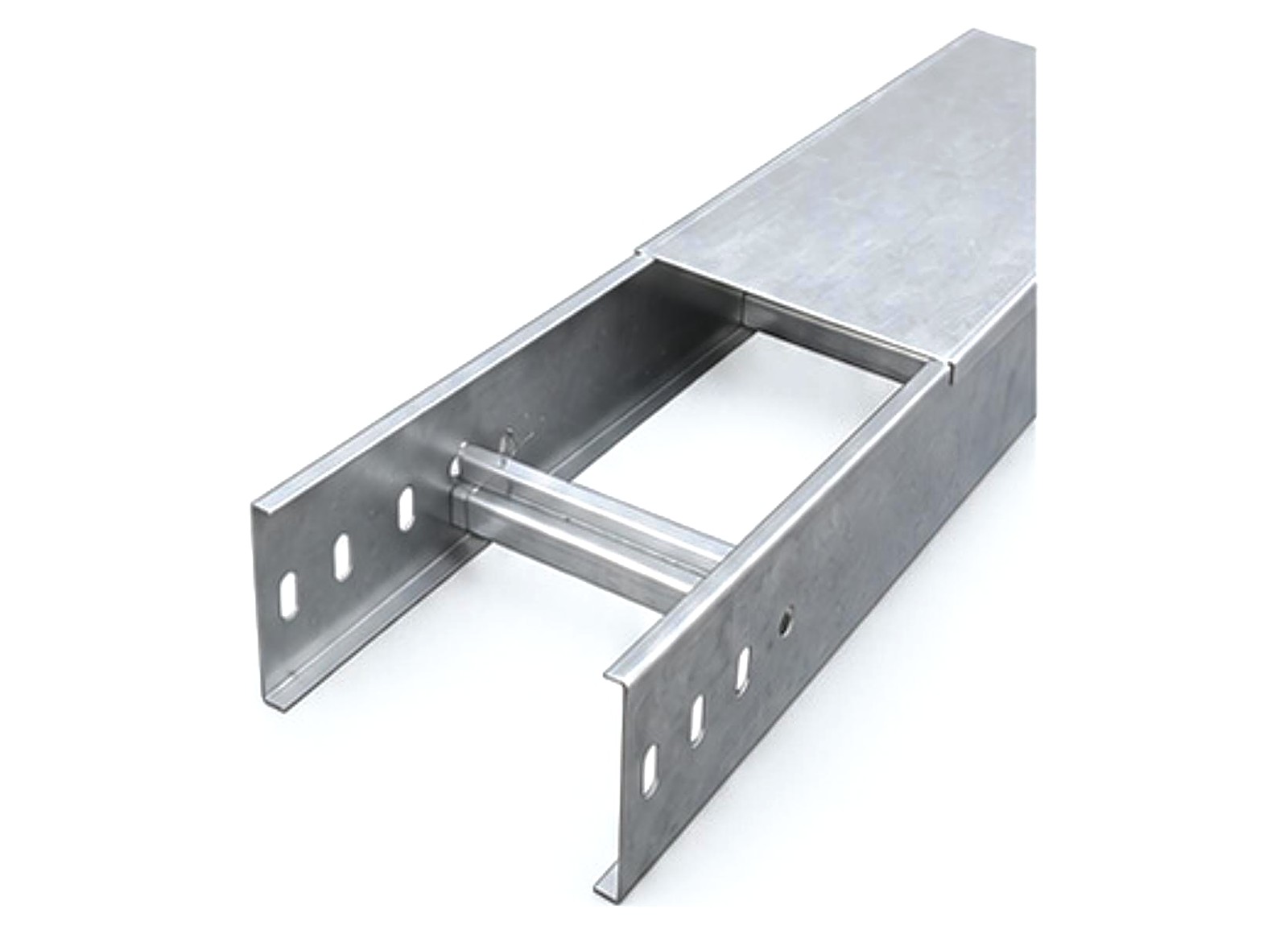
Load capacity is the cable load a tray run can carry over its support span without sagging or damage to the cables. It is a property of the whole system — tray, fittings, couplers and supports together — not of one straight length on its own. IEC 61537 tests the tray as a system for exactly this reason: the standard covers mechanical strength under load, and the load is carried across the span between two supports.
That is why a quotation states the tray type, the dimensions and the thickness together. Two trays with the same width and height can carry very different loads if one is thicker, or if one is hung on a shorter span. Comparing quotations by width alone misses the numbers that decide whether the tray holds.
Thickness, span and supports: the three-way trade
Thickness is set by the load the tray must carry over its support span. Heavier cable loads and longer spans call for thicker material; lighter, closely supported runs do not need it. Our catalog range is 50 to 1200 mm wide, 10 to 200 mm high and 0.5 to 3.0 mm thick — the thickness is chosen inside that range for the load and the span, not picked from a single standard value. Our cable tray sizing guide sets out what each dimension decides.
Supports are the third side of the trade, and the one most often forgotten. Halving the support span lets the same tray carry more, but every extra hanger is material and labour on site. The cheapest compliant answer is usually a balance: a thickness the factory stocks, on a span the site can hang, with hangers the installer can fit. Send the span the site allows with the BOQ, and the quotation can be priced on the real layout instead of an assumed one.
One caution: a tray that looks strong enough on paper fails in practice when the supports are further apart than the layout assumed. Support spacing is taken from the catalog tables for the tray type, width and load — it is not guessed on site, and it is not stretched to save hangers.
Tray type changes the answer
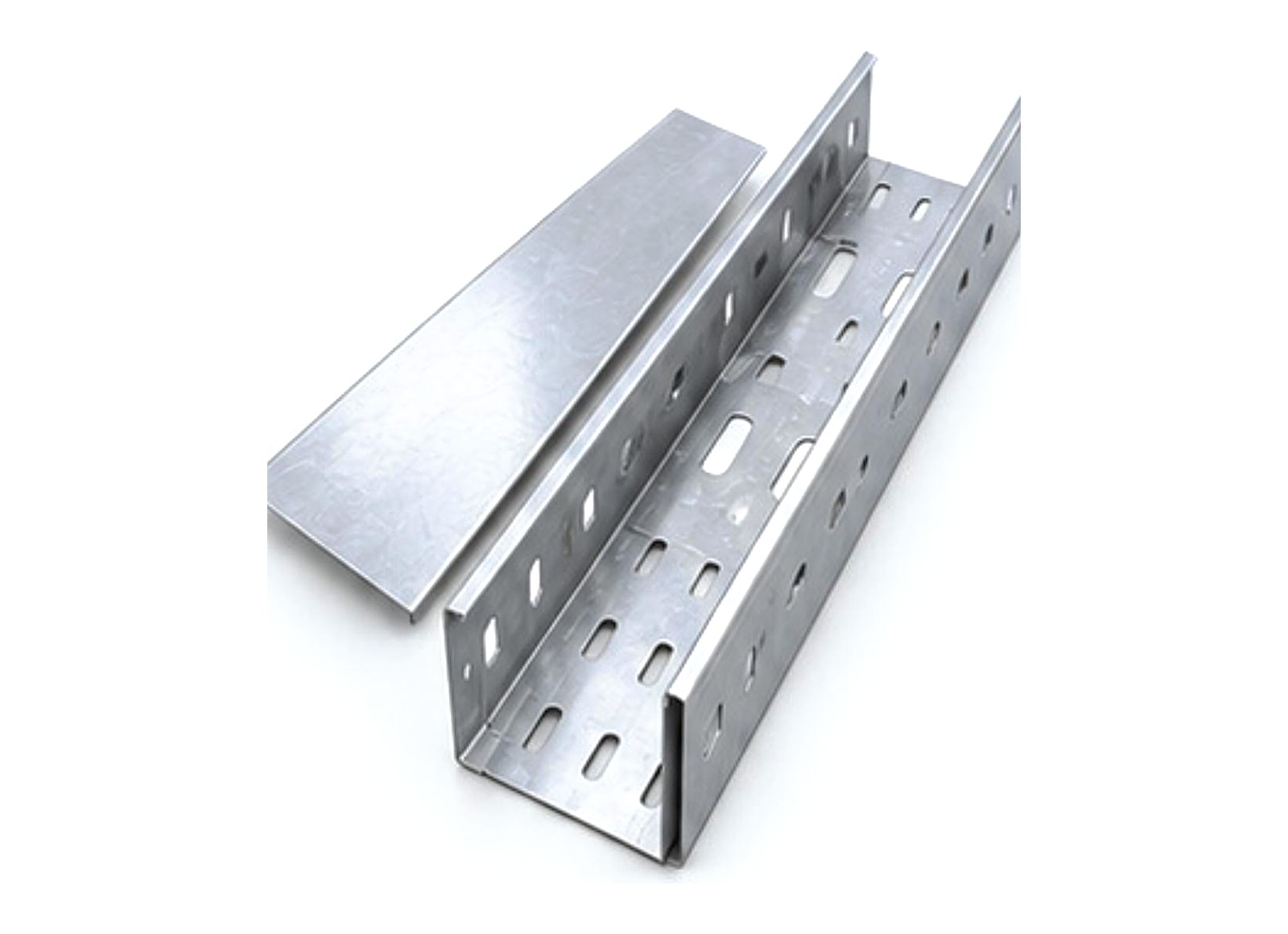
A cable ladder carries heavy loads over long spans: two side rails and rungs give it the stiffness for power-cable runs, and the open rungs let heat out. A perforated tray has a continuous slotted base, which holds small and control cables that would fall through a ladder, and it suits mixed power and control bundles. A wire mesh tray is a light-load tray for data cables — our wire mesh cable tray guide sets out where it stops. A solid-bottom tray, or trough, is chosen for protection from above, not for extra load.
The type is fixed before the thickness. A thick perforated tray on a long span is still the wrong answer for a heavy power run; the right answer is a ladder at the thickness and span the load needs. Our cable ladder page and perforated cable tray page list the published sizes for each type.
What to put on a BOQ
A BOQ that only gives the tray size forces the quotation to assume the load and the span — and assumptions are where undersized trays come from. Send these five lines with every tray item: the cable types and their weight per metre from the cable schedule; the support span the site allows; the tray type; the width and height; and the finish and environment. Thickness is then selected for the load and stated on the quotation, with the catalog table it was taken from.
Where the cable schedule is not ready, send the cable types and the route, and the load is worked out with the quotation — stated in writing before you commit, not added later as a variation.
For the tray itself, use our cable tray weight calculator to estimate the total weight of each run from its type, width, height and thickness — a useful check for freight and container loading before the quotation comes back.
What to verify before ordering
Check three things on the quotation before ordering. First, that the thickness, width and height match the BOQ line for line. Second, that the supports — hangers, brackets and cantilever arms — are listed as separate lines, in the strut channel range, so the span on the quotation is the span the site will hang. Third, that the tray type and finish match the environment the run passes through. Couplers and fixings are in the fittings and accessories range.
One honest note on numbers: we do not publish load-test figures, and our quality checks are thickness and dimensions — the same two measurements a third-party inspection reports. The load for your run is confirmed against the manufacturer's data and stated on the quotation. If a supplier quotes you a load figure, ask which span, which tray type and which test it was measured at — a number without those three is not checkable.
Ordering a heavy power-cable run?
Send your BOQ with the cable schedule and the support span the site allows — Jason replies personally with a priced offer, tray, fittings and supports on separate lines.
Frequently asked questions
What thickness do I need for a 600 mm wide tray?
Thickness is set by the cable load and the support span, not by the width alone. Send the cable schedule and the span the site allows, and the thickness is selected from the catalog tables and stated on the quotation.
Does a thicker tray always mean a stronger tray?
Thicker steel helps, but the tray type and the support span matter as much. A thick perforated tray on a long span can still be the wrong choice for a heavy power run, where a ladder at the right thickness and span is the answer.
How far apart can the supports be?
Support spacing is taken from the catalog tables for the tray type, width and load. It is not guessed on site, and stretching the spacing to save hangers is the most common cause of a sagging run.
Can I mix tray types on one run?
Yes. A common layout is ladder for the heavy power sections and perforated tray where small or control cables need a continuous base, joined with couplers and reducers from the fittings range.
Why is there no load table with kg/m on your website?
Load capacity depends on the whole system — tray type, thickness, span and supports — so a single table would mislead more than it helps. The load for your run is confirmed against the manufacturer's data and stated on your quotation.
Get a quotation for your project
Send your BOQ or drawings and the tray type, size, finish, and quantity you need. Quotations are prepared per BOQ — no fixed price list — and cover trays, fittings, and accessories to match. WhatsApp: +86 195 6350 7326 · Email: [email protected]