
Cable ladder wins where the load is heavy and the span is long. Perforated tray wins where cables need a continuous base and drainage. The two types share the same size range — 50 to 1200 mm wide, 10 to 200 mm high, 0.5 to 3.0 mm thick — so the choice is about the job, not the dimensions.
| Question | Cable ladder | Perforated tray |
|---|---|---|
| Construction | Two rails joined by rungs, open base | U-channel with punched slots |
| Heavy power cables | The usual choice | Possible at shorter spans and thicker material |
| Long support spans | The usual choice | Needs closer supports for the same load |
| Ventilation and heat | Fully open — air moves freely around cables | Slots give some airflow, less than a ladder |
| Cable support | Cables rest on rungs | Continuous base supports full length |
| Drainage | Water falls straight through | Slots drain water from the base |
| Adding cables later | Easy — open top | Easy — open top |
| Fittings | Bends, tees, reducers, risers | Elbows, tees, crosses, vertical bends, reducers |
What a cable ladder is
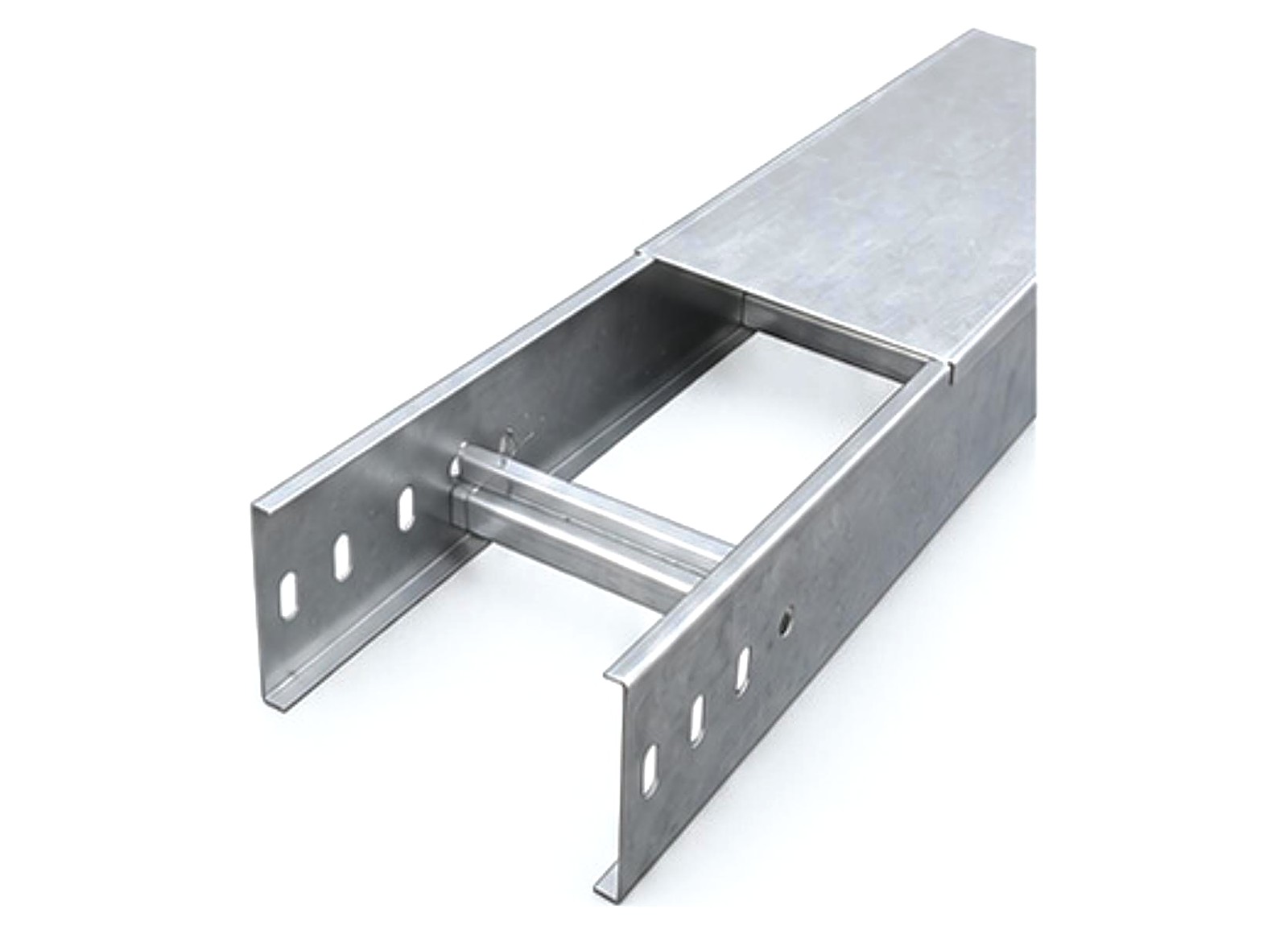
A cable ladder is two side rails joined by rungs, with no solid bottom at all. Power cables lie across the rungs, open to the air on all sides. Our L1–L7 ladder series is supplied in Q235 steel, stainless steel 201, 304 and 316, and aluminum 6061-T6 and 6063-T5, The catalog publishes load–span curves for the L series prepared to DIN EN IEC 61537, so the section is selected from a curve for the span and the load — not from a rule of thumb.
The open construction is the point. Air moves freely around the cables, so heat leaves the run instead of building up under a cover. Cables are visible along the whole run, and new cables can be laid in from above. That is why the ladder is the standard choice for heavy power-cable runs, plant pipe racks and vertical risers, where the load is high and the supports are far apart.
What a perforated tray is
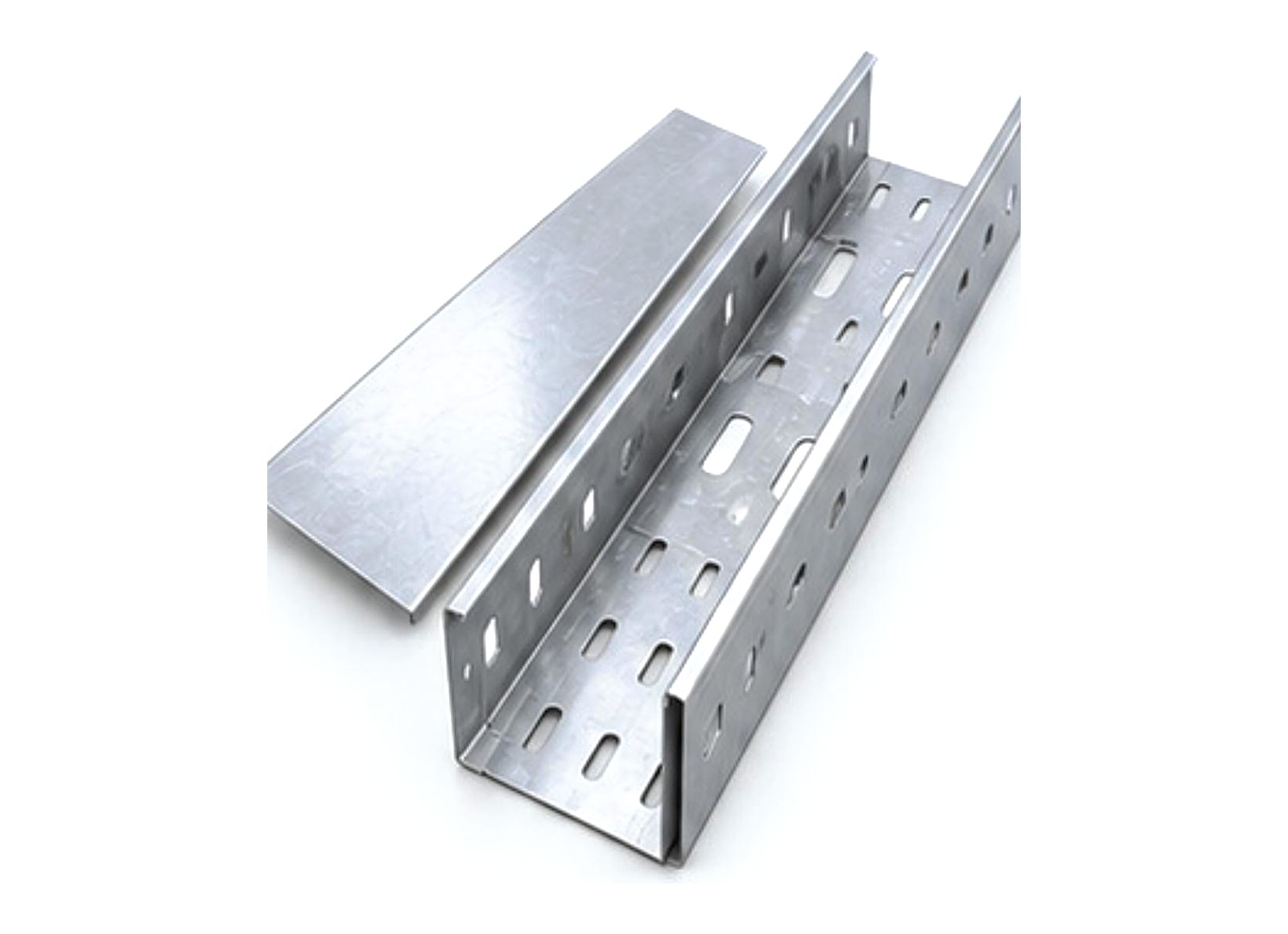
A perforated tray is a U-shaped channel with punched slots in the base and the side walls. Cables lie on a continuous slotted base, so small cables are supported along their full length. Our P1–P6 perforated series shares the same size grid as the ladder — 50 to 1200 mm wide, 10 to 200 mm high, 0.5 to 3.0 mm thick — in the same materials and finishes, .
The slots do three jobs. They let some air through, so the tray runs cooler than a solid-bottom tray. They drain water, so a semi-outdoor run does not hold a puddle in the base. And they give fixing points along the whole run, so cables can be tied down wherever the route needs it. Covers are available as an option, and the fitting range matches the tray in size and finish.
Load and span: where the ladder wins
Load is the first question, and it is decided by the tray type, the thickness and the support span together. A ladder carries heavy power cables over long spans because its side rails are deep, continuous members. A perforated tray can carry the same cables, but only on shorter spans or in thicker material — the slotted base is not a load-carrying member in the same way.
If the support positions are fixed — steelwork every few metres, a riser with few fixing points — the ladder is the answer, and the quotation cites the load–span curve used. Our cable tray load capacity and span guide sets out how thickness, span and tray type work together, and the quotation states the section, thickness and span it was priced on.
Ventilation, heat and drainage
A ladder is fully open, so it gives the most ventilation of any steel tray type. Power cables running near their rated current stay cooler on a ladder than in any enclosed or semi-enclosed section, and the open top means heat escapes instead of collecting under a cover.
Perforated tray gives part of that benefit: the slots let air through and drain water — useful on semi-outdoor routes and in washdown areas. A solid-bottom trough tray gives neither, which is why the perforated vs solid bottom comparison usually ends with perforated tray for general power and control runs.
Cost: what decides the price gap
Perforated tray usually costs less than a ladder of the same size, because it is a single formed channel rather than two rails plus welded rungs. But the comparison that matters is the installed cost, not the price per metre of straights. A ladder on long spans needs fewer supports and hangers; a perforated tray on the same route needs closer supports, so the support count goes up.
The honest way to compare is to price both options on the same BOQ: same route, same cables, same support positions. Send the route length, the support spacing the structure allows, and the cable schedule, and the quotation prices both types on separate lines with their supports. Prices are always per BOQ — there is no fixed price list — and the two options can be compared line by line before anything is ordered.
Choosing on a BOQ
Work through four questions before ordering. First, what is the heaviest cable load and the longest span between supports — that usually settles ladder against perforated on its own. Second, do the cables need a continuous base, for small cables that should not sag between rungs. Third, does the route need drainage or airflow, or does it need a cover against dust and falling objects. Fourth, the finish — the same choice for both types; see our cable tray finishes compared guide.
State the answers on the BOQ: tray type, width, height, thickness, material, finish, and the support spacing. Where a run mixes types, list each type on its own line with its own length. The quotation prices each type separately. The standard that covers tray systems, including both types, is IEC 61537.
Choosing between ladder and perforated tray?
Send your BOQ with the route length, support spacing and cable schedule — Jason replies personally with a priced offer, both types on separate lines where the route suits them.
Frequently asked questions
Can perforated tray carry the same load as a cable ladder?
Not over the same span. A ladder carries heavy power cables further between supports because its side rails are continuous load-carrying members. Perforated tray can carry the same cables on shorter spans or in thicker material, and the section for your span and load is confirmed with your quotation.
Is a cable ladder better for ventilation?
Yes. A ladder is fully open, so air moves freely around the cables and heat escapes. Perforated tray gives some airflow through its slots, which is better than a solid-bottom tray but less than a ladder.
Do both types come in the same sizes?
Yes. Both share the catalog range of 50 to 1200 mm wide, 10 to 200 mm high and 0.5 to 3.0 mm thick, in Q235 steel, stainless steel 201, 304 and 316, and aluminum 6061-T6 and 6063-T5. The size grid is the same; the construction is what differs.
Which type is cheaper?
Perforated tray usually costs less per metre of straight section, because it is one formed channel rather than rails plus rungs. But the installed cost depends on support spacing — a ladder needs fewer supports — so both options should be priced on the same BOQ before deciding.
Can I mix ladder and perforated tray on one project?
Yes, and it is common. Ladder is used on the heavy main runs and long spans, perforated tray on branches and control runs. Each type is listed on its own BOQ line with its own fittings, and the fittings match the tray type, size and finish.
Get a quotation for your project
Send your BOQ or drawings and the tray type, size, finish, and quantity you need. Quotations are prepared per BOQ — no fixed price list — and cover trays, fittings, and accessories to match. WhatsApp: +86 195 6350 7326 · Email: [email protected]